The logistics industry is facing a dual challenge: a severe labor shortage and working-hour restrictions imposed by Japan's "2024 Problem." Driver shortages, an aging warehouse workforce, and ever-growing e-commerce demand—RFID (Radio Frequency Identification) technology is rapidly gaining attention as the key solution to these pressing issues.
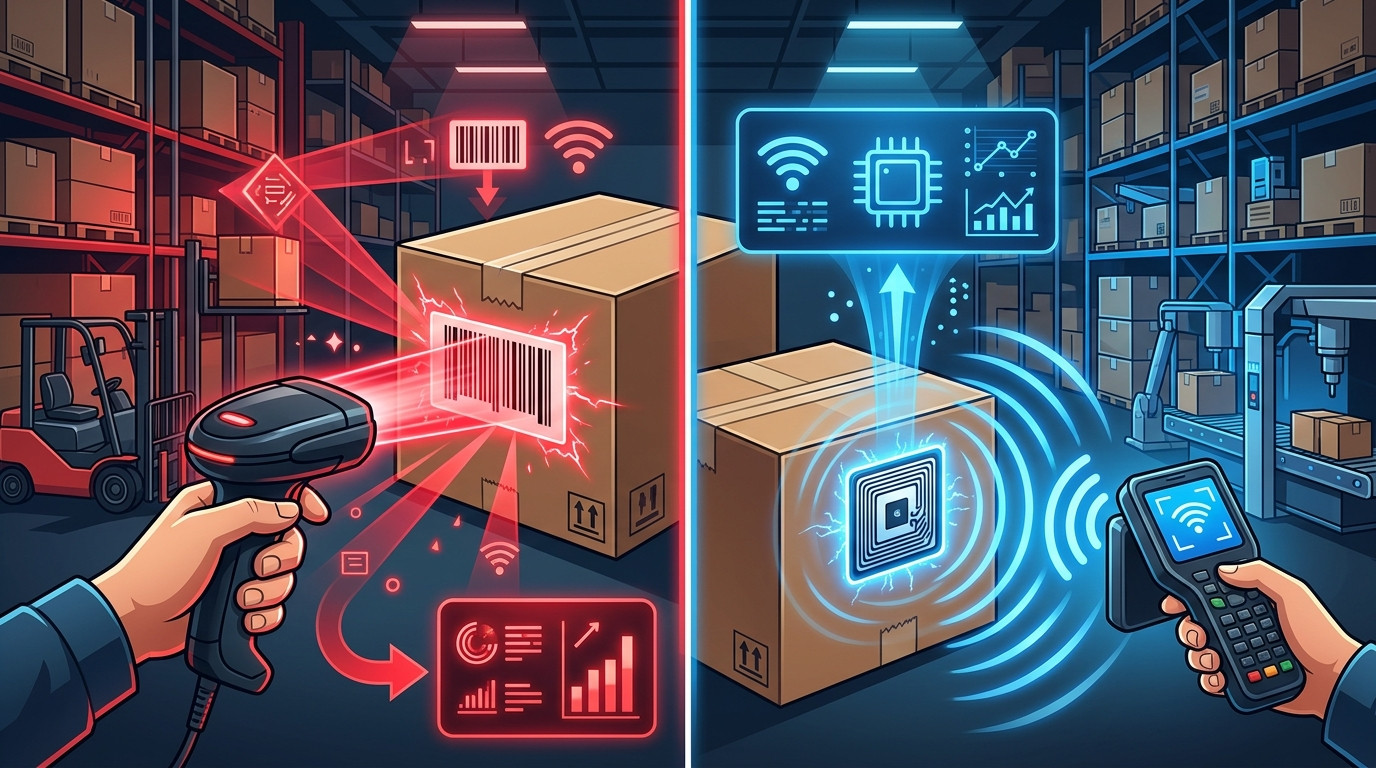
Unlike barcodes that require scanning items one by one, RFID can instantly read hundreds of items simultaneously, dramatically transforming every stage of logistics operations. This article provides a comprehensive overview of RFID applications at each stage from receiving to delivery, along with their measurable implementation benefits.
Overview of RFID Applications in Logistics
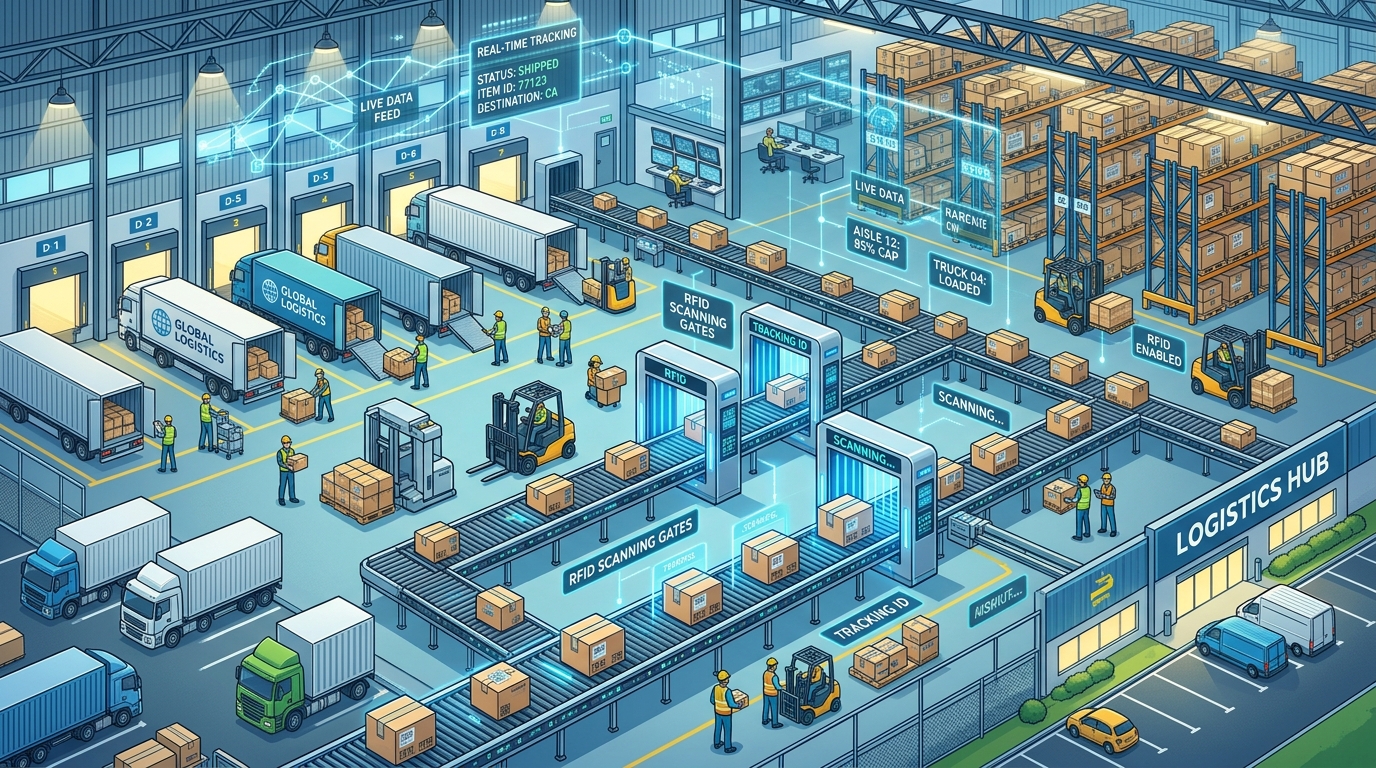
The logistics process consists of five stages: "Receiving → Storage → Picking → Shipping → Delivery." RFID can be applied to all of these stages, enabling full visibility across the entire supply chain.
| Stage | Conventional Challenges | After RFID Implementation |
|---|---|---|
| Receiving | One-by-one barcode scanning, lengthy inspection work | Automated batch inspection at gate passage |
| Storage | Inventory counts take days, unknown item locations | Real-time inventory tracking, automated stocktaking |
| Picking | Paper list verification, human error | Handheld terminal navigation, instant error detection |
| Shipping | Visual confirmation, risk of mis-shipment | Gate-type automated inspection, 99.99% shipping accuracy |
| Delivery | Unknown delivery status, difficult temperature management | Real-time tracking, IoT sensor integration |
The greatest strength of RFID is its "contactless, batch reading" capability. It allows the contents of a carton to be verified without opening it, and pallet-level inspection to be completed in an instant.
Automating Receiving and Shipping Inspection
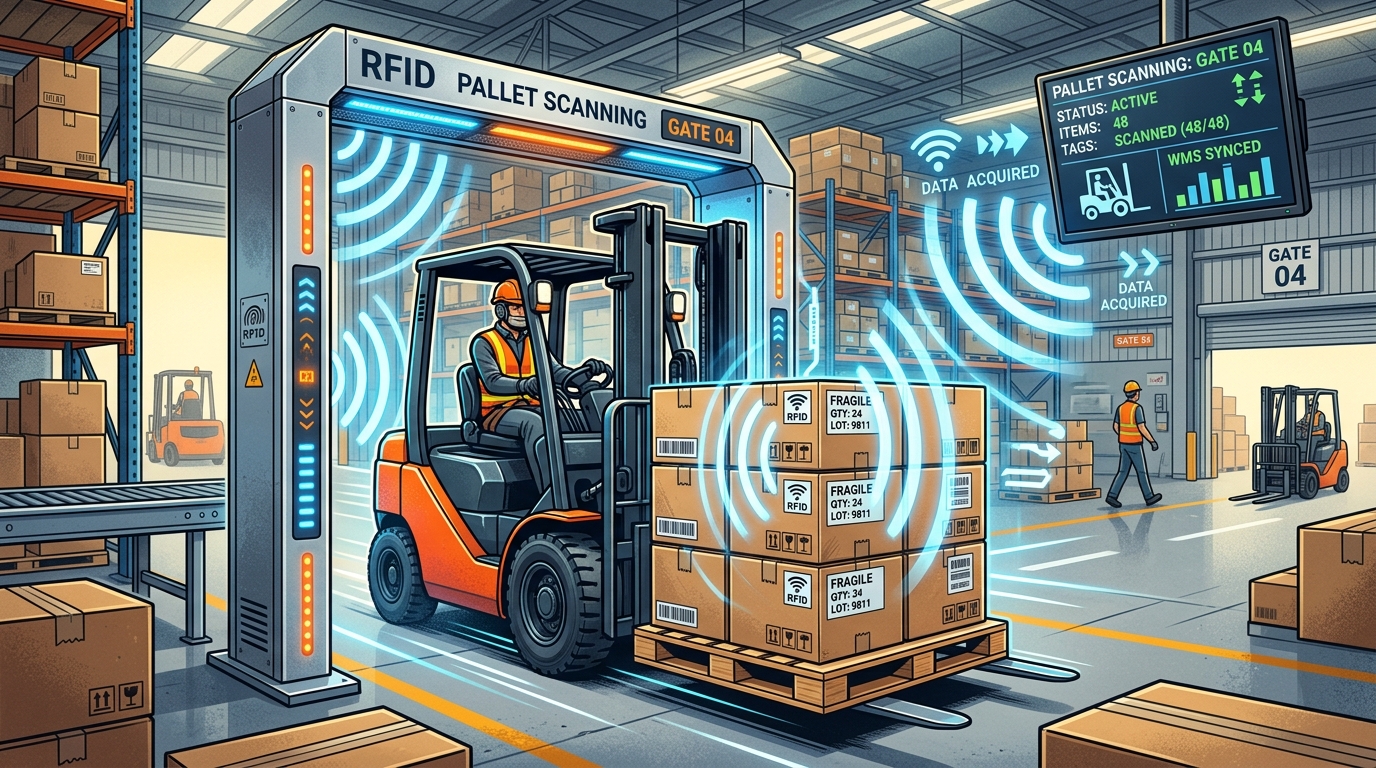
Automating receiving and shipping inspection offers the greatest RFID benefit in logistics operations.
How Gate-Type RFID Readers Work
RFID gates are installed at warehouse receiving and shipping docks, allowing inspection to be completed simply by a forklift passing through with an entire pallet. Inspection that previously took 15 to 20 minutes per pallet under barcode-based systems is now completed in just a few seconds.
:::info-box
Benefits of Gate-Type RFID Inspection
- Reduces inspection time by up to 80%
- Significantly reduces the burden on workers
- Reduces mis-shipment rates to 0.001% or less
- Enables 24-hour unmanned inspection
:::
Approach to Zero Mis-Shipments
By automatically cross-referencing RFID tag data with shipping instruction data, discrepancies in item numbers, quantities, and delivery destinations are detected in real time. Alerts are issued instantly to prevent mis-shipments before they occur.
Improving Picking and Sorting Efficiency
In the picking stage, location management and navigation functionality powered by RFID deliver significant results.
RFID Location Management
RFID tags are placed on shelves and in zones, enabling real-time tracking of the precise storage location of each item. Workers can follow on-screen guidance from a handheld terminal to pick items via the shortest route.
:::point-box
Three Key Points for Picking Efficiency
- Shortest-Route Navigation: AI optimization reduces walking distance by 30%
- Real-Time Verification: Picking errors are instantly detected and flagged
- Progress Visualization: Work completion rates managed centrally on a dashboard
:::
Automated RFID-based sorting systems are also being deployed in the sorting stage. Items on conveyors are automatically identified via RFID and directed to the appropriate lane by delivery destination, improving sorting speed to more than double the conventional rate.
Delivery Traceability

RFID contributes significantly not only within the warehouse, but also to traceability throughout the delivery process.
Real-Time Delivery Tracking
By installing RFID readers at each delivery hub, it becomes possible to track in real time "when and where" a shipment passed. Automated delivery status notifications can be sent to shippers and recipients.
Temperature-Sensing RFID Tags for Cold Chain Management
For pharmaceutical and food deliveries, RFID tags with integrated temperature sensors play a vital role. They monitor temperature during transit and issue alerts when readings deviate from the configured range.
:::warning-box
Temperature Excursions Directly Cause Quality Incidents
Pharmaceutical GDP (Good Distribution Practice) mandates temperature management records during transport. RFID temperature tags are a powerful tool for achieving compliance.
:::
Implementation Benefits of RFID in Logistics
The following table summarizes improvement results by process, based on data from logistics companies that have already implemented RFID.
| Improvement Metric | Before Implementation | After Implementation | Improvement Rate |
|---|---|---|---|
| Receiving inspection time (per pallet) | 15 min | 3 min | 80% reduction |
| Mis-shipment rate | 0.5% | 0.001% | 99.8% improvement |
| Stocktaking time required | 3 days | 4 hours | 94% reduction |
| Picking productivity | 60 orders/hr | 95 orders/hr | 58% improvement |
| Inventory accuracy | 95% | 99.9% | +4.9 pt improvement |
| Delivery status visibility rate | 30% | 98% | +68 pt improvement |
:::success-box
ROI (Payback Period) Estimate
RFID implementation costs for a mid-size logistics warehouse (approx. 5,000 tsubo) range from approximately JPY 30–50 million. Through labor cost savings, reduction in mis-shipment losses, and elimination of stocktaking labor, payback is achievable within an average of 1.5 to 2 years.
:::
RFID as a Countermeasure for the 2024 Problem
The Work Style Reform Act, which took effect in April 2024, limits truck drivers' overtime to 960 hours per year. This is projected to cause a shortage of up to 14% in transport capacity, placing the entire logistics industry under pressure to improve efficiency.
RFID serves as an effective countermeasure to the 2024 Problem from the following perspectives:
- Reducing cargo wait times: Gate-type inspection cuts average driver wait times from 40 minutes to 5 minutes
- Streamlining loading and unloading: Batch inspection dramatically reduces ancillary task time for drivers
- Facilitating relay transport: RFID-based shipment traceability enables smooth handoffs at relay hubs
- Enabling joint delivery: Mixed-load cargo from multiple shippers can be individually managed via RFID
According to estimates by Japan's Ministry of Land, Infrastructure, Transport and Tourism, advancing logistics DX can compensate for approximately 60% of the transport capacity shortfall caused by the 2024 Problem. RFID is one of the core technologies driving this transformation.
Conclusion
RFID technology is a powerful solution to virtually every challenge facing the logistics industry. An 80% reduction in processing time through automated receiving and shipping inspection, a 58% improvement in productivity through picking efficiency gains, and full supply chain visibility—these outcomes are also highly effective as a response to the 2024 Problem.
When implementing RFID, it is recommended to begin with the receiving and shipping inspection process, where the greatest impact is expected, and then progressively expand the scope of application. There is no doubt that advancing logistics DX through RFID is essential to building a sustainable logistics framework.